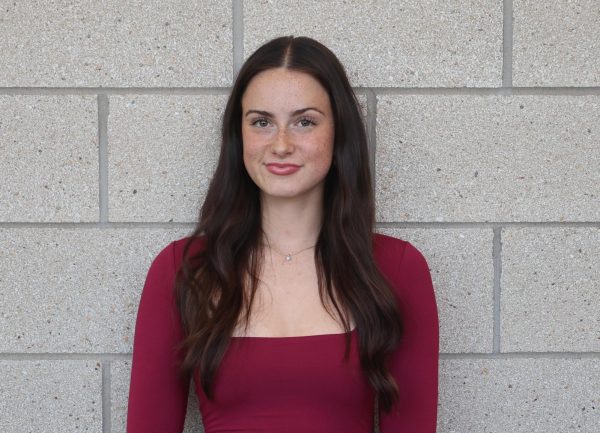
English teacher Storm Shaw
Q: What is your talent?
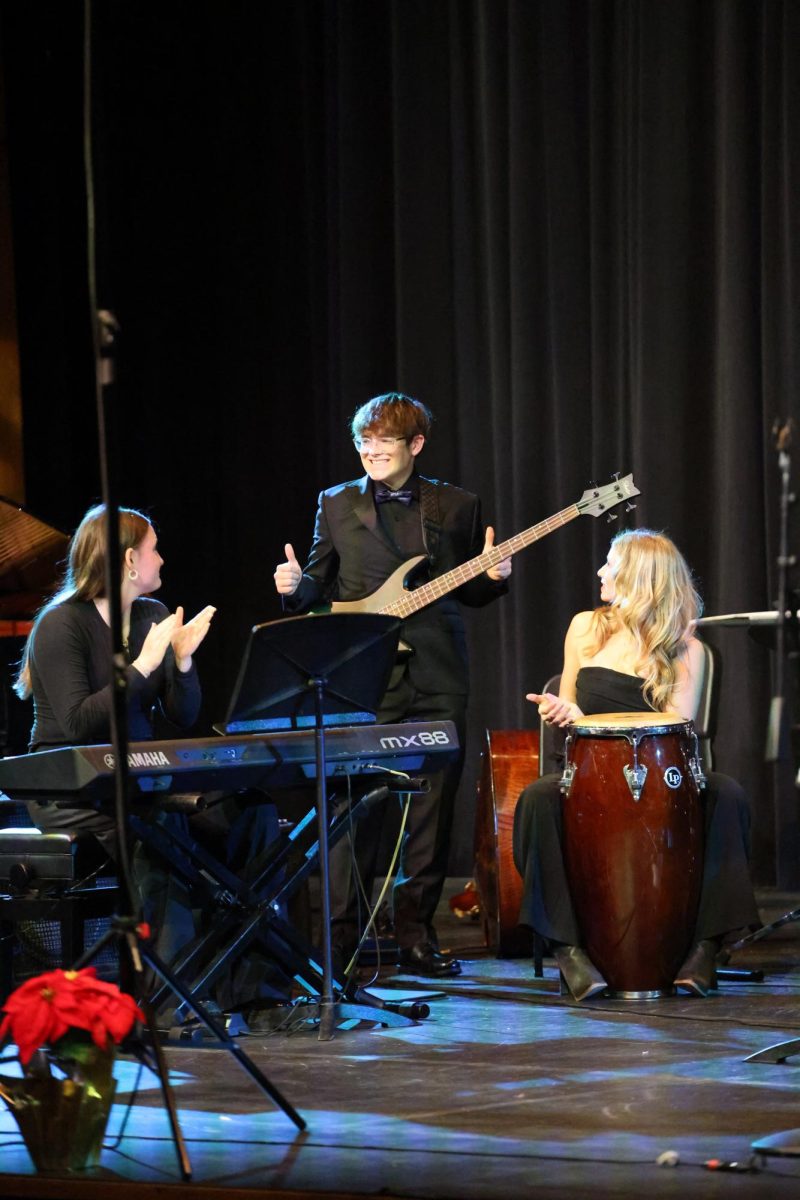
A: I’m in a band called Cobra Doug. It’s like pop punk.
Q: How did you get into it?
A: I used to be in a metal band in high school and college, so it was just like screaming vocals … And then sometime in college, that kind of fizzled out and then it was a couple years without doing it, but I was always kind of interested in making music. So I was, like, writing poetry and lyrics and things. But then sometime in like 2017-ish, I reached out to some friends who used to also play music, and we decided to start kind of just writing music for fun again. And I wanted to challenge myself and try something I hadn’t really done, which was singing. And I kind of stumbled my way through it, so we’ve made some music I’m proud of.
Q: What do your practices look like?
A: So, we only practice when we book some shows, because we only play shows every couple months. So, if we do that, we usually practice for, like, two or three hours on the weekend, a couple weekends leading up to the show. Otherwise, when we’re just writing stuff and recording, we just do it at our friend’s house. He has a studio where we work. And we’ll just put in a couple hours, like writing, and we write straight into Pro Tools, which is like the recording software … We’re more of like a studio band than a live performance band, just based on the time that we have available to us.
Q: What would you say to someone who might want to get into music and/or start a band?
A: I think we should definitely resurrect the garage band era, and kids should be starting bands and playing basement shows and stuff. I grew up playing shows in kids’ basements in this area, packing it full of 100 plus kids and playing hard core shows in basements … If you listen to our music, like you don’t have to be really good to make music. Like, I’m not a great singer by any means, but, like, I can sing enough, and I like to write lyrics. So, if you have friends who play instruments, write some stuff [and] do it.
Art teacher Emily Patterson
Q: What is your talent?
A: My talent is painting. I always love to make art, and I always felt like painting is like the utmost two dimensional art form. And I’ve been doing a lot of pet portraits because people like to memorialize their pets, and a lot of the animals I painted are animals that have died … When I give someone this painting and they like to cry, they get all emotional and they get to hang it in their home … It makes me feel good. And it’s a nice little side hustle that pays cash money.
Q: How long do you spend and about how many portraits have you made?
A: Probably eight to 12 hours … I don’t charge as much as I probably should, but I like doing it, and I have a job. I’ve probably done, like, 25 portraits.
Q: What would you say to someone who might want to get into selling a hobby of theirs?
A: You have to really be confident in selling yourself. That’s why I am an art teacher, not an artist, because I couldn’t do the content and self promotion.
Physics teacher Aaron Ballew
Q: What is your talent and how long have you been doing it?
A: [My talent is] juggling, [as in] throwing objects in the air and catching them before they hit the ground. [I have been doing it for] 31 years.
Q: What got you into juggling?
A: My father juggled, and then I attended the juggling booth at the renaissance fair as a young kid. My dad juggled a lot. It looked hard, and so I didn’t want to do it. And then one day, I decided I wanted to do it, and then I tried.
Q: How do you practice?
A: Just basically, at first, I started on one end of the room, and as I threw them forward, instead of up, I ended up on the other side of the room and tried not to break everything in the house. And that’s usually when I had to stop.
Q: What’s your favorite part?
A: I enjoy getting to show it off, and every now and then seeing people actually enjoy doing or seeing what I’m doing, even if it provides just a little bit of fun or laughs or joy.
Q: What is the biggest challenge with juggling,
A: [The biggest challenge is] catching, the throwing part’s easy. It’s the catching part. That’s the hard part.
Q: How do you stay involved with it?
A: I do it every now and then with the students for them and show them occasionally. I’ll even teach a few. Otherwise, it’s kind of like riding a bike. Once you kind of learn it, it doesn’t really go away. Maybe some of the harder tricks get harder, but no, the basic stuff sticks with you for life.
Q: How does it compare to teaching?
A: You know, a lot more similarities than you would think. Managing a whole bunch of things at one time, versus managing a whole bunch of things all at one time before they hit the ground and everyone starts crying and things break.
Q: Why should people explore their talents or passions?
A: I think the best way to learn how to be great at things is to learn how to be great at something, and it will carry over to other aspects of your life.
Q: What is a talent you wish you had or want to try?
A: Learning many languages would be a good talent to have.