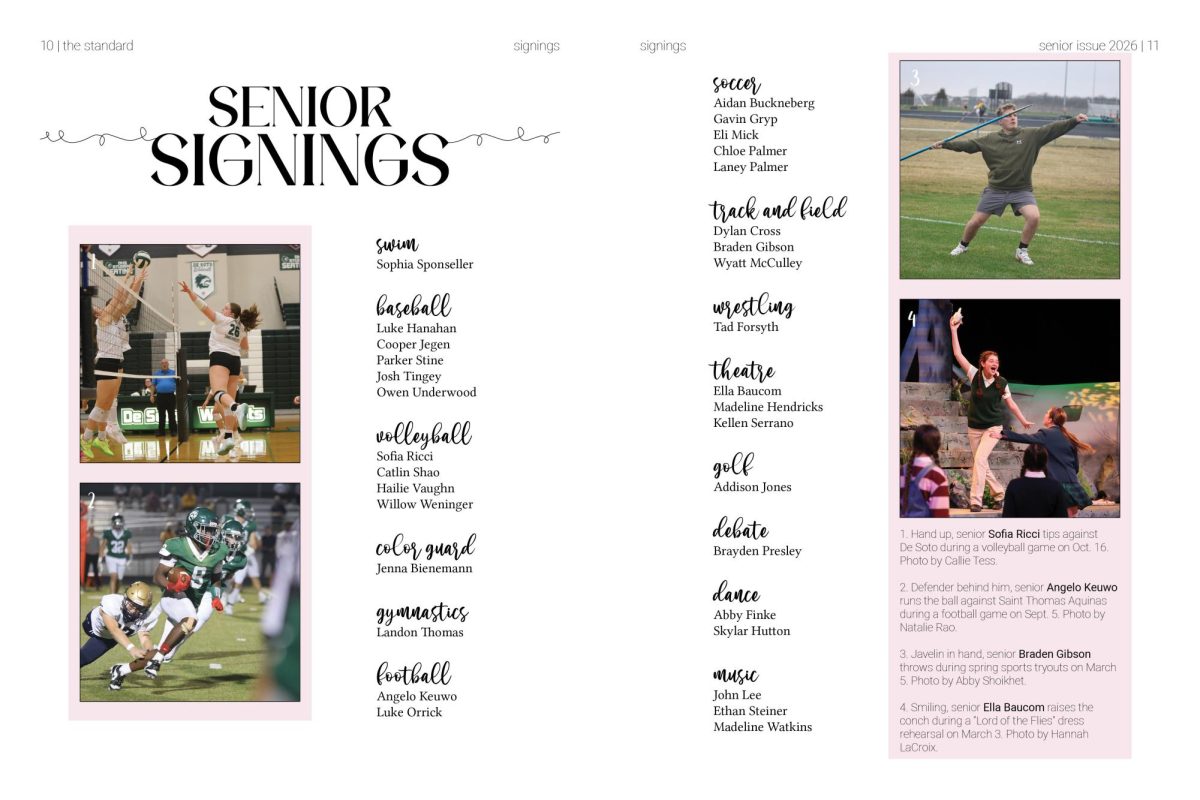
Success has followed the 4-speaker debate team for years, with this year being no exception. Not only did the team win State for the 11th year in a row, but they also earned top places in all tournaments they competed in. Senior Brayden Presley said he loves the community surrounding debate and has met many new people, both locally and internationally, through it.
“Growing up, I liked to argue with my parents,” Presley said. “And I always knew that at Southwest, their debate team was really good because they have the best coach in the country, [debate teacher] Mr. Ryan McFarland.”
The team has competed at various tournaments this season, having many successes. Senior Rohan Chalamalasetti said the competitions are both in-state and out-of-state.
“Usually, we do pretty good [at tournaments]. I think the best we’ve done this year was at a tournament with like 200 teams [where] we made top eight,” Chalamalasetti said. “We usually get top eight at most of the tournaments we go to. We’ve won most of the Kansas tournaments we’ve been to.”
Senior Sophia Taghizadeh has been in debate since her freshman year and said she originally joined by accident but is thankful for the lessons she has learned and the people she has met through it, describing her 4-Speaker team debate partner, junior Suhas Kommineni, as very hardworking.
“I always felt like I had big shoes to fill, especially with having such a successful team. And then being partnered with somebody younger this year made me feel like I had to fill the shoes of my partner from last year, who was older than me, in terms of being there to support them, being a good role model and a leader, that kind of thing,” Taghizadeh said. “It was kind of expected that we would win State. We didn’t ever really think that we were going to lose, but it feels really good to continue on that legacy and be a part of something a lot bigger than myself here at the school.”
This year, the team upheld the school’s reputation, only losing one ballot out of all the rounds they competed in for State. Presley said it has happened in years past, but this year there was closer competition, making it more challenging. To prepare for competition, Presley said they used class time to focus on research and practice speeches.
“The topic [this year] is about the Arctic, so we do a lot of research about military expansion, resource policies and just overall government action inside of the Arctic region and how countries are interacting with each other,” Presley said.
Taghizadeh and Kommineni debated together on the affirmative team, while Presley and Chalamalasetti were on the negative team.
“We do a lot of prep work based on what we know other teams have said in the past, what they could say,” Chalamalasetti said. “All evidence is open source, so everyone can see it. So, we just sort of look at that and we’re like, ‘oh, what is the best answer?’ Then how are they going to answer our answers and how are we going to answer their answers, our answers, so on and so forth.”
After competing for years, Taghizadeh said her perspective has changed over time, and she has felt pressure in different ways, but is happy with her spot on the team and the role she plays. She said, despite the challenges, she was happy to stick with debate.
“Debate has taught me how to be confident more than anything else. One of the biggest lessons I’ve carried from my time on the team is something that McFarland told me, which was that I have all the skill in the world, I just need to be confident,” Taghizadeh said. “I try to take that lesson with me through a lot of my other activities and things. Confidence is very much key. I have learned a lot about failure and disappointment, and that sometimes things don’t go the way you want to, no matter how much you try to prepare for it. But I’ve also learned a lot about being part of a team, having people that you can rely on and how to lead for other people as well.”